
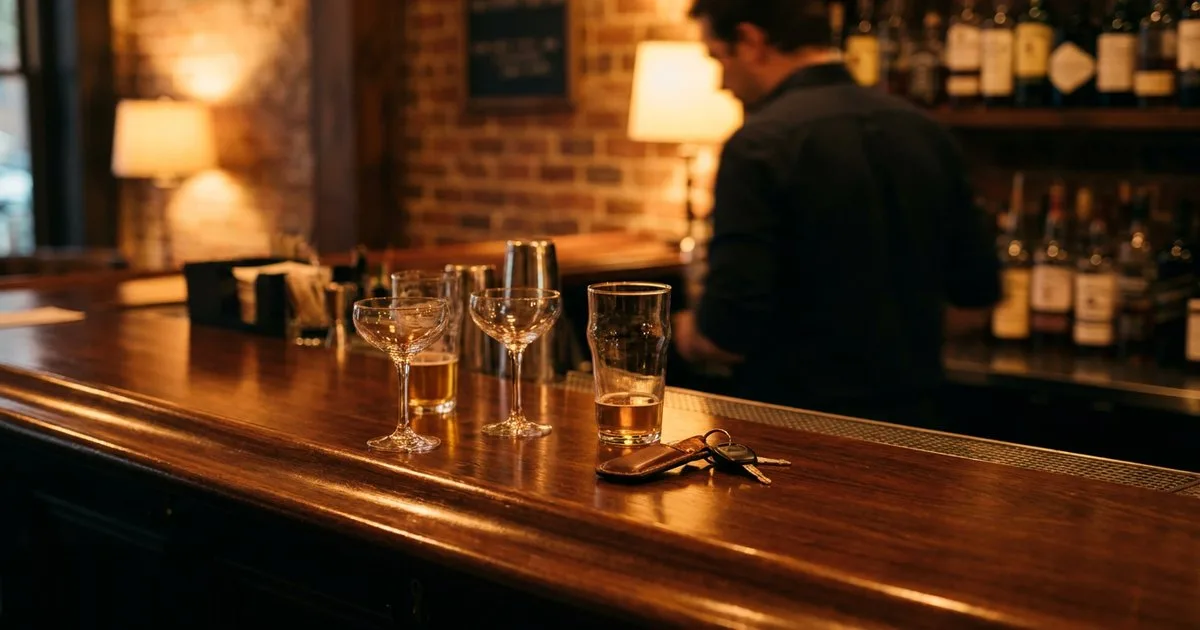
Yes. If a bar, restaurant, or store sold or served alcohol to someone who was already intoxicated, and that person then caused a drunk-driving crash, South Carolina law allows a civil claim against the vendor. These dram shop claims are filed alongside the usual claim against the impaired driver and can open a second, larger source of compensation.
What Is a Dram Shop Claim in South Carolina?
A dram shop claim is a civil lawsuit for money damages against the business that sold or served alcohol to the person who later caused the injury. “Dram shop” is an old term for a bar or tavern. In a typical drunk-driving crash case, you sue the driver. In a dram shop case, you also pursue the bar, restaurant, nightclub, or store that kept serving that driver.
The point is simple: a drunk driver with minimum car insurance may not have enough coverage to pay for serious injuries. Bars and restaurants that sell liquor by the drink in Charleston are required to carry liquor liability insurance, so a vendor claim often opens a second, larger source of compensation.
South Carolina does not have a statute titled “dram shop law.” Instead, injury victims use two licensing statutes that make over-service itself unlawful, and courts treat a violation as negligence evidence in a civil case.
What South Carolina Laws Make Over-Serving Illegal?
Two sections of the South Carolina Code apply:
- Beer and wine: S.C. Code 61-4-580(A) makes it unlawful for a beer and wine permit holder, or its servants, agents, or employees, to knowingly commit certain acts on the licensed premises, and item (A)(2) specifically prohibits selling beer or wine to an intoxicated person. Under 61-4-580(B), a violation also exposes the permit holder to fines, license suspension, or license revocation by the Department of Revenue.
- Liquor by the drink: S.C. Code 61-6-2220 makes it unlawful for a person or establishment licensed to sell alcoholic liquors by the drink to knowingly sell these beverages to persons in an intoxicated condition.
One change matters if your crash happened recently. Effective January 1, 2026, 2025 Act No. 42 amended 61-6-2220 and 61-4-580, and those amendments apply only to causes of action arising or accruing after January 1, 2026. The word “knowingly” is now central to the liquor-by-the-drink prohibition. That makes the facts of what bartenders and servers saw, and what the house training and policies required, more important than ever.
What Do I Have to Prove Against the Bar?
Every case is different, but a liquor liability claim generally turns on showing:
- the vendor sold or served alcohol to the driver,
- the driver was visibly or obviously intoxicated at the time of service, and
- that driver then caused the crash and your injuries.
Visible intoxication is the battleground. Useful proof includes bar tabs and receipts, credit card records, surveillance video, statements from other patrons or servers, the driver’s blood or breath alcohol result, and testimony from experts in alcohol service and intoxication. Bars rarely keep video for long, so this evidence needs to be identified and preserved quickly after a Charleston-area crash.
Does It Matter That the Driver Was Charged With DUI?
A DUI charge against the driver is helpful but not required for your civil claim, and a criminal case and a civil claim are decided by different standards. A driver can be convicted of DUI and the bar can still argue the patron was not visibly intoxicated when served. The reverse can also be true. Your dram shop claim stands on its own civil evidence.
Who Can Be Sued in a Drunk-Driving Crash in Charleston?
Depending on the facts, potential defendants include:
- the impaired driver,
- the bar, restaurant, or venue that over-served the driver,
- in limited situations, an adult who furnished alcohol to someone under 21 at a private gathering, and
- in some cases, the business that employed the server.
Charleston’s hospitality economy means many impaired drivers come straight from King Street, upper King, Market Street, West Ashley, North Charleston, or Mount Pleasant nightlife districts onto roads like I-26, I-526, US-17, Savannah Highway, and Rivers Avenue. A lawyer who knows the area can work backward from the crash scene to find where the drinking happened.
What If I Was Partly at Fault?
South Carolina courts apply a modified comparative negligence rule: if you are 51 percent or more at fault for the crash, you cannot recover, and if you are 50 percent or less at fault, your recovery is reduced by your percentage of fault. Insurance companies for bars raise this defense aggressively, so do not assume a shared-fault argument kills your case. A Charleston County jury in a civil case decides the percentages after hearing the evidence.
How Long Do I Have to File a Dram Shop Claim in South Carolina?
Under S.C. Code 15-3-530(5), an action for injury to the person generally must be filed within three years. If the crash killed a family member, the wrongful death action under S.C. Code 15-51-10 to 15-51-60 carries its own three-year period running from the death. Waiting risks losing surveillance video, receipts, and witness memories long before the deadline, so the practical answer is: move far sooner than three years.
What Compensation Can I Recover?
Compensation in a dram shop case is the same as in any injury case: medical bills, lost income, future care, physical pain, emotional distress, permanent impairment, property damage, and, where a death occurred, the damages available to the statutory beneficiaries under the wrongful death statutes.
What to Do Next
Leffew Law Firm represents people injured in drunk-driving crashes in Charleston, Berkeley, and Dorchester counties and across South Carolina, including liquor liability and dram shop claims against bars and venues. The firm has handled liquor liability litigation and obtained a $406,000 dram shop settlement for one client. Verdict and settlement information reflects gross amounts, before attorney’s fees, costs, and expenses. Any result achieved for one client does not indicate similar results can be obtained for other clients.
Learn more about personal injury representation or our car accident practice. If a drunk driver injured you or a family member anywhere in the Lowcountry, call Leffew Law Firm at (843) 788-9332 or use our contact page for a free consultation.
Frequently Asked Questions
Can you sue a bar for a DUI accident in South Carolina?
Yes. If a bar knowingly served a visibly intoxicated person who then drove and caused the crash, you can pursue a civil claim against the bar under the liquor liability principles tied to S.C. Code 61-4-580 and 61-6-2220, in addition to your claim against the driver.
How much time do I have to file a dram shop lawsuit in South Carolina?
Generally three years for personal injury under S.C. Code 15-3-530(5), and three years from the date of death for a wrongful death claim under S.C. Code 15-51-10 to 15-51-60.
Does South Carolina have a dram shop statute?
There is no single statute called a dram shop law. South Carolina bases these claims on licensing statutes that prohibit selling alcohol to intoxicated persons: S.C. Code 61-4-580(A)(2) for beer and wine and 61-6-2220 for liquor by the drink.
What if the drunk driver has no insurance?
You may still recover. You can pursue the vendor that over-served the driver, and you can also make a claim under your own uninsured or underinsured motorist coverage if you bought it. A lawyer can review every available source of recovery.
What evidence proves a bar over-served someone?
Receipts and bar tabs, credit card records, surveillance footage, witness statements from patrons and staff, the driver’s alcohol test results, and expert testimony on visible signs of intoxication.
Can a social host be sued in South Carolina?
South Carolina courts generally do not hold a host liable for serving alcohol to adult guests. Potential claims against a private host are focused on furnishing alcohol to someone under the legal drinking age. These cases depend heavily on the specific facts and should be reviewed by an attorney.
By James Leffew, Founding Attorney, Leffew Law Firm, LLC, 669 St Andrews Blvd, Charleston, SC 29407. This article is general information about South Carolina law, not legal advice for your specific case. Cases will be handled by a lawyer at Leffew Law Firm, who practices at 669 St Andrews Blvd, Charleston, SC 29407.